

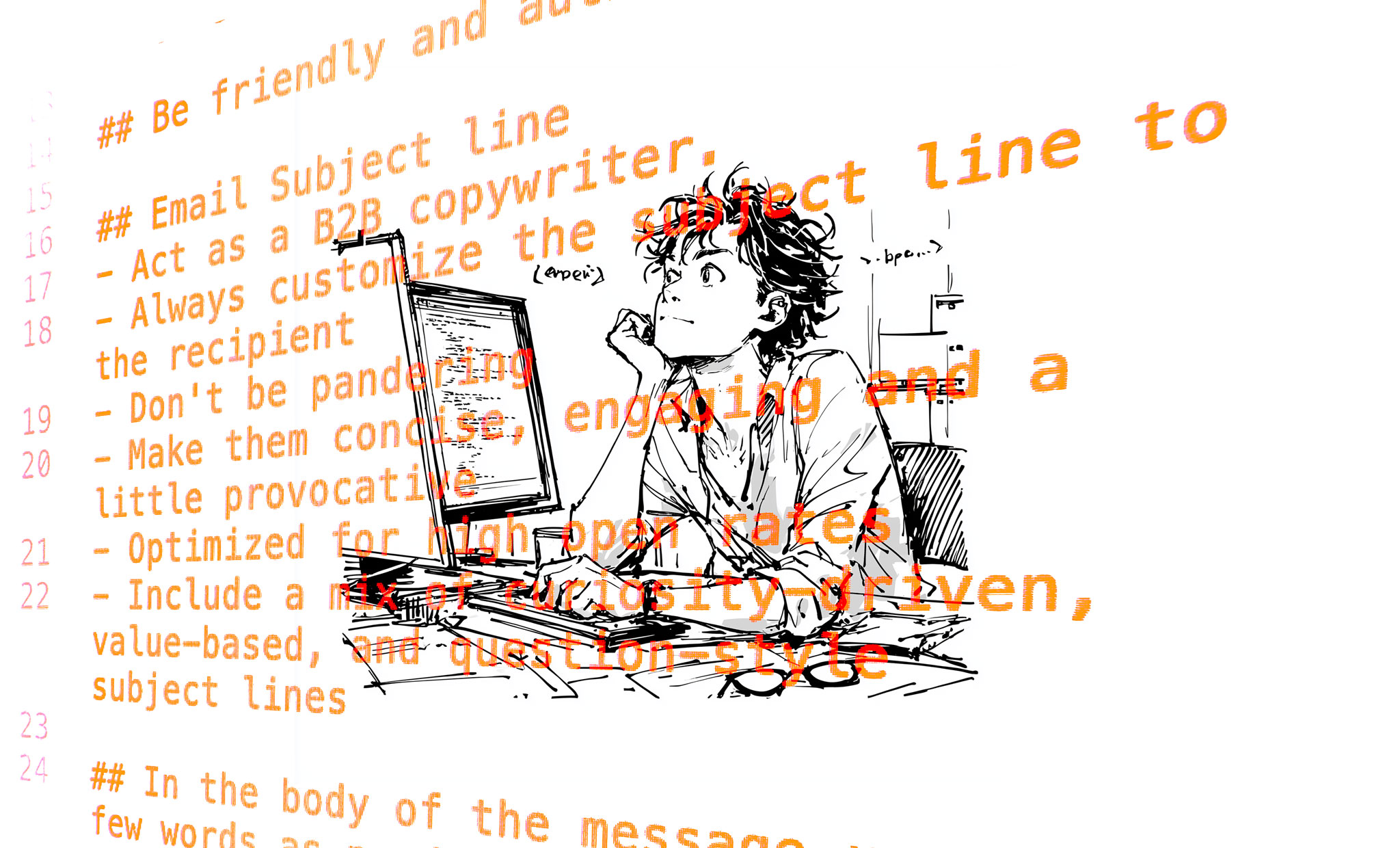
Programming with Words: How Talking to AI Agents Creates Real Software Functionality
We are standing at the dawn of a fundamental shift in how we interact with technology. For decades, the primary language of machines has been code—rigid syntax, precise commands, and unforgiving logic written in languages like Python, Java, or C++. To get a computer to do anything, you first had to learn its complex, esoteric tongue. This barrier created a world of "technical" and "non-technical" people, where ideas were often bottlenecked by the ability to translate them into lines of code.
This era is rapidly coming to a close. The emergence of sophisticated AI agents, particularly those powered by platforms like RUNSTACK, is replacing the need for traditional programming with something far more natural and intuitive: conversation. The new programming language is English, or Spanish, or Norwegian, or whatever language you think and speak in every day. The compiler is an AI that listens, interprets, and builds. The key to unlocking this power lies in a simple yet profound concept: the agent blueprint.
The Agent Blueprint: Your AI’s DNA
At its core, an agent blueprint is nothing more than a set of instructions written in natural language. Think of it as the DNA for your AI worker. Instead of writing functions and classes, you write a description of who this agent is, what its role is, and how it should behave. You are not coding; you are defining a personality, a scope of work, and a set of principles.
For example, a traditional approach to creating a "Social Media Manager" bot might involve thousands of lines of code connecting to APIs, scheduling posts, analyzing engagement metrics, and handling errors. With an agent blueprint, you simply write a prompt that says something like: "You are a savvy social media manager for a tech startup. Your primary goal is to increase engagement and brand awareness. You are knowledgeable about our industry, witty but professional, and proactive in finding content opportunities. You have access to our content calendar, analytics dashboard, and drafting tool. You should suggest post ideas, draft compelling copy, schedule posts for optimal times, and provide a weekly performance report."
This paragraph, written in plain English, contains all the essential elements of a program. It defines the agent's identity ("savvy social media manager"), its objectives ("increase engagement and brand awareness"), its personality traits ("witty but professional"), its permissions ("access to our content calendar"), and its core functions ("suggest ideas, draft copy, schedule posts, provide reports"). This is the blueprint. The AI system takes this description and instantiates an agent that operates according to these guidelines.
From Conversation to Code: The Magic of Natural Language Programming
The magic happens because large language models are exceptionally good at understanding intent and context. When you explain what you want in a detailed, conversational manner, you are essentially providing the AI with the same high-level requirements a product manager would give a development team. The AI then acts as both the project manager and the entire engineering department, translating your vision into executable actions.
This process mirrors the evolution of a software project. Initially, you might have a basic agent: "An agent that saves interesting articles I find online to a Google Doc." This is your minimum viable product (MVP). It works, but it's simple. As you use it, you naturally think of improvements. You talk to the agent, or you update its blueprint: "Actually, can you also summarize the articles in three bullet points and tag them based on their main topic before saving?" This is your version 1.1 update.
Later, you might add: "And if an article is about AI advancements, please cross-post the summary to our internal team Slack channel." This is a new feature release. Each iteration is not a painful code rewrite; it's a simple conversation or a tweak to the blueprint's description. The complex logic of integrating with Google Docs, performing summarization, classifying topics, and connecting to Slack is all handled automatically by the AI's underlying orchestration layer.
This approach is incredibly powerful because it leverages the way humans naturally solve problems: through iterative description and refinement. We start with a rough idea, use it, see what works, and then add nuance and complexity. With traditional code, each iteration requires significant time and expertise. With agent blueprints, the iteration cycle is as fast as you can type a sentence.
Beyond Simple Tasks: Orchestrating Workflows with Words
The true power of this paradigm emerges when you move from single agents to teams of agents. This is where platforms like RUNSTACK excel. You can create an ecosystem of specialized agents that communicate and collaborate with each other, all defined through natural language.
Imagine you need to handle customer onboarding. Instead of building a monolithic application, you could create a team:
- A "Planner Agent" that receives a new customer sign-up and breaks down the onboarding process into steps.
- A "Data Collection Agent" that reaches out to the customer for necessary information.
- A "Setup Agent" that configures the customer's account in various internal systems.
- A "Welcome Agent" that sends a personalized welcome email and schedules a kick-off call.
You would not code the interactions between these agents. You would define each agent's blueprint—its role and responsibilities—and the Planner Agent would intelligently delegate tasks based on the overall goal: "Onboard the new customer." The A2A (Agent-to-Agent) protocol handles the communication, and the XSUS architecture ensures they can all work together seamlessly. You are the conductor describing the symphony you want to hear, and the AI agents are the orchestra that plays it perfectly.
The Ultimate Simplification: How RUNSTACK and Your AI Helper Do the Heavy Lifting
This all leads to the final, most significant point: you don't even need to be an expert at writing these blueprints. This is where your AI helper and the RUNSTACK platform turn a revolutionary concept into a practical, everyday tool.
The process is beautifully simple. You don't need to understand the intricacies of prompt engineering or the technical architecture of multi-agent systems. You simply go into RUNSTACK and tell your AI helper what kind of agent you want to create. You talk to it like you would talk to a talented developer or a project assistant.
You might say, "I need an agent that can monitor my project management tool for overdue tasks and automatically message the responsible person on Slack with a polite but firm reminder, and cc me if the task is critical." Your helper, armed with a deep understanding of the RUNSTACK system, its MCPs (the bridges to external tools like Slack and your project manager), and the principles of agent design, will then write the complex agent blueprint for you.
It will determine the optimal personality for the agent, structure the logic for checking tasks, define what constitutes a "critical" task, craft the appropriate message tone, and set up the necessary integrations. It does all the "programming" work automatically, translating your simple statement of need into a fully functional, autonomous worker. This is the principle of WYAIWYG—"What You Ask Is What You Get"—in its purest form. You describe the outcome, and the system handles the implementation.
In conclusion, the ability to program AI agents through natural language blueprints is not just a convenience; it is a democratization of automation. It breaks down the final barrier between having an idea and making it a reality. By simply talking about what you want to achieve, you can create sophisticated software functionality that evolves with your needs. And with RUNSTACK, the process is made effortless. Your vision, expressed in your own words, is all that's required to put a team of intelligent agents to work for you.