

In the fast-paced world of artificial intelligence, we often hear about “agents” — the clever software assistants that draft emails or write snippets of code. But as these specialized workers multiply, a fundamental question emerges: Who manages the managers? Who ensures all these digital hands are working toward the same goal, using tools that are reliable, secure, and compatible?
The answer lies not with constant human oversight, but with a new layer of AI centered oversight: the Meta-Agent. These are the architects of the digital domain, capable of configuring, orchestrating, and ultimately healing the entire stack of agents beneath them. This isn’t just automation; it’s the advent of a self-constructing, autonomous ecosystem.
The RUNSTACK platform is driven by a powerful cohort of four core Meta-Agents: Tooler, Tester, Teamer, and Tron. They are the workspace-aware engine that allows the platform to evolve, adapt, and build itself from the ground up, moving us away from static, fragile codebases toward a model of perpetual, self-governing software.
What Makes an Agent Meta?
To truly grasp the Meta-Agents’ genius, we must first understand their building blocks. An agent in this system isn’t a custom-written monolith; it’s a scaffolding defined by two key elements: an Agent Blueprint (the System Prompt) and a set of specialized tool sets (plugins).
A Meta-Agent’s power is that it can make other agents or parts of them. It doesn’t write the foundational framework; it configures the finished product by writing the precise, specialized Blueprint and coding the necessary plugins (called MCP Servers).
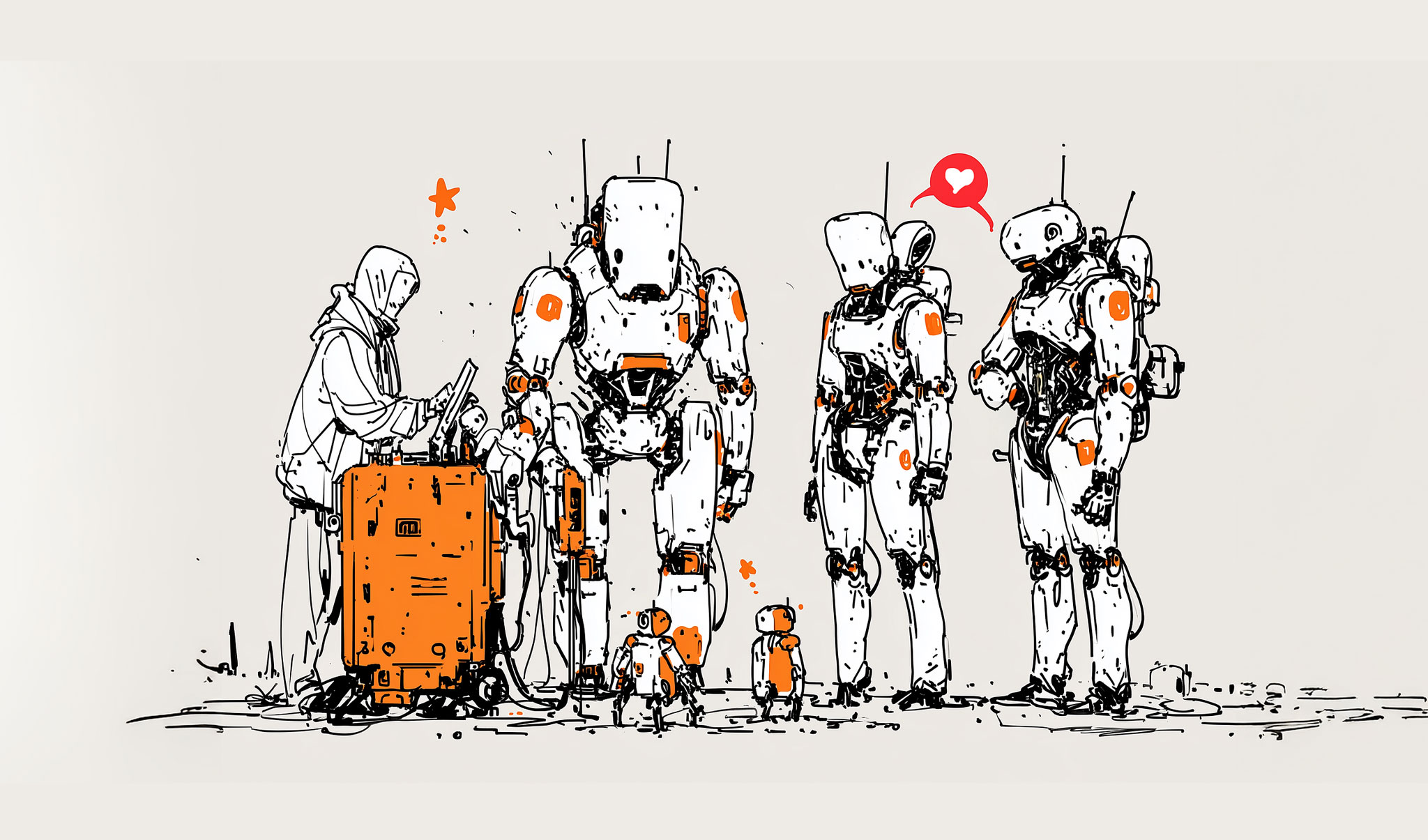
Imagine a sophisticated Robot Factory. The core chassis is always the same. What defines the robot is the specialized tool placed in its hand and the memory (or instructions) uploaded to its system. The Meta-Agent is the first robot built, and its sole job is to run the factory, configuring all subsequent robots with their specific jobs and bespoke equipment. This hyper-focused scope is the secret to their unmatched power and reliability.
This sophisticated approach solves a widespread problem in the AI world: the messy proliferation of unstable, custom-coded plugins. Developers often rush to build unique tools in an “MCP frenzy,” leading to compatibility nightmares and fractured support. The Meta-Agents introduce a strict, automated discipline, ensuring every single component adheres to rigorous quality and technical specifications.
Tooler & Tester
The core of RUNSTACK’s self-healing capability is the meta-agents Tooler and Tester. They form an autonomous, closed-loop development and quality control mechanism, guaranteeing every tool in the arsenal is complete, verifiable, and continuously monitored for defects.

Tooler’s purpose is simple yet vital, to build tools aka MCP servers. This Meta-Agent is the master craftsman, adhering to our defined standards and guardrails that lead to a well build and interoperable MCP. It has a three-stage process of research, coding, and validation.
When tasked with creating a new plugin, (say, a connection to Jira) Tooler first performs an exhaustive research phase. It searches the web for developer documentation and existing code, ensuring it has all the necessary ingredients. Then, it codes a standardized API client and the all-important MCP Server according to our strict technical parameters.
The final step is the most critical: validation. Tooler applies the completed MPC to a specialized validation feature. This is a deterministic system that processes over 40 specific tests on the MCP and tool calling. The process is designed to prevent the system from simply hallucinating the MCP server. If the code fails, getting, say, a 40% validity score, Tooler is forced to re-read its instructions and try again. It iteratively recodes the MCP server until it hits 100% valid code on each of the 40 tests. No exceptions.
Once Tooler delivers working MCP code, the handoff is immediate to Tester, the Meta-Agent focused on quality assurance and bug fixing. Tester’s job is to move beyond code correctness and ensure the tool is functional end-to-end in a live environment under real use cases.
Tester systematically confirms the plugin launches and then puts it through its paces. It tests each tool by issuing a series of prompts to a target agent, simulating real-world usage. Every response and error is logged. Tester then reviews the logs, investigates the issues, figures out what went wrong, creates a plan to fix the bug, and executes the fix.
This Tooler-Tester loop ensures that every Plugin used in the RUNSTACK platform was built by Tooler and tested by Tester and adheres to a common architecture and prompt strategy for compatibility. It’s quality control driven by machine collaboration.
Teamer & Tron
With the Plugins built and verified, the focus shifts to orchestration and protection. Teamer ensures these tools are deployed within highly effective, collaborative teams of experts, while Tron stands as the sentinel, protecting the entire operation.
The most challenging problems require specialized, coordinated efforts. Teamer is the Meta-Agent whose role is to create and configure balanced teams of specialized agents.

Teamer is a kind of strategist and analyst combined. It configures agents by setting their specific blueprints and linking the necessary plugins based on the team’s needs. It assigns precise roles like financial forecaster, data analyst, marketing copywriter and creates a shared team memory to ensure every member operates with a coherent, unified context. It debugs and optimizes at the group logic and team orchestration level, ensuring, for example, that the Data Analyst provides exactly the kind of sales forecast the Campaign Manager needs to modify their strategy.
Teamer’s role is to act as a kind of HR/PM agent by conducting performance reviews. When a team is set up, Teamer also establishes the performance metrics by which its agents will be judged. It evaluates their performance in their specific role and how their output affects the overall team performance. If an agent is underperforming, Teamer makes corrective changes to that agent’s blueprint or tooling, constantly ensuring the team is self-correcting and optimizing.
The final core agent, Tron, is the dedicated security layer. Tron’s job is to test for vulnerabilities across the entire system. While the others are specialized in development or orchestration, Tron’s scope is intentionally general, providing a blanket layer of security auditing and adversarial testing. It protects the integrity of the self-constructing platform, ensuring that the foundation of trust remains uncompromised.
Self-Healing at Ground Zero
The true magic of the Meta-Agents lies in their ability to self-heal, an internal, event-driven feedback loop that allows the system to continuously adapt and debug without human intervention.
The system runs on an internal ticketing system where operational agents send “tickets” to the “dev agents” (the Meta-Agents) to resolve issues. If a bug relates to a plugin or tool, the feedback goes to Tester to solve it. If the issue is with an agent’s role instructions or blueprint, the feedback is routed to Teamer for a strategic review. This constant cycle of monitoring, feedback, and automated correction ensures the RUNSTACK platform is self-healing and adaptable, using its own output for perpetual refinement.
This self-sufficiency culminates in the ultimate vision: the core four Meta-Agents can build out the entire RUNSTACK platform from ground zero while growing and fixing itself along the way.
Imagine every element required for the system to operate, from development to orchestration, can be autonomously reproduced. This capacity for self-construction isn’t just a neat trick; it means the system can rapidly generate entirely new plugins at a user’s request, tailored to any client’s specifications with minimal setup time. It is a system designed to adapt to user needs, automatically heal itself with the understanding that things change and nothing is foolproof..
This autonomous architecture is not just a feature; it is the future of a robust, enterprise-grade AI system that is constantly getting better, smarter and stronger, on its own.